Salt Air Corrosion Damage Roof Repair
Miami, FL · Damage Repair
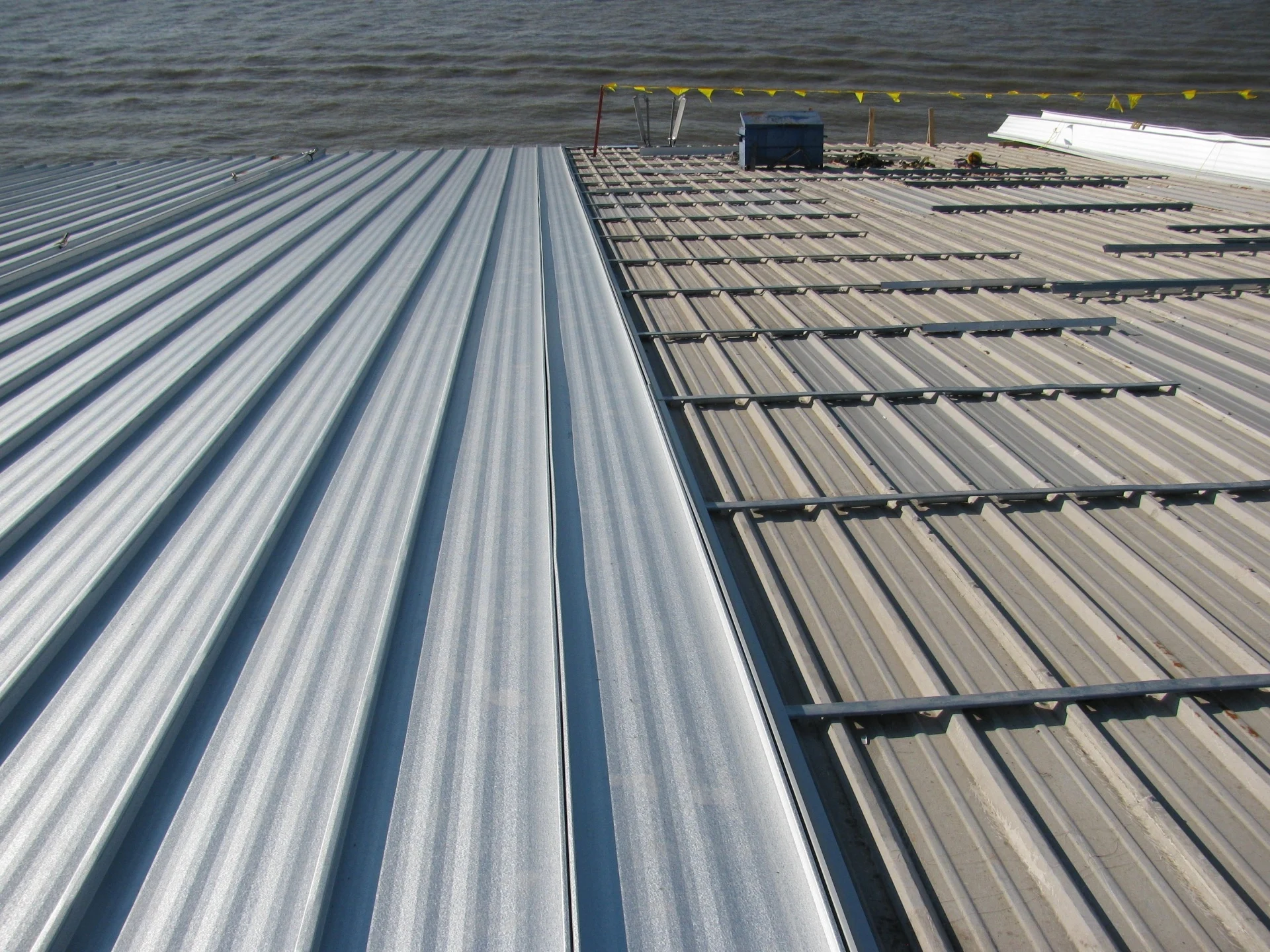
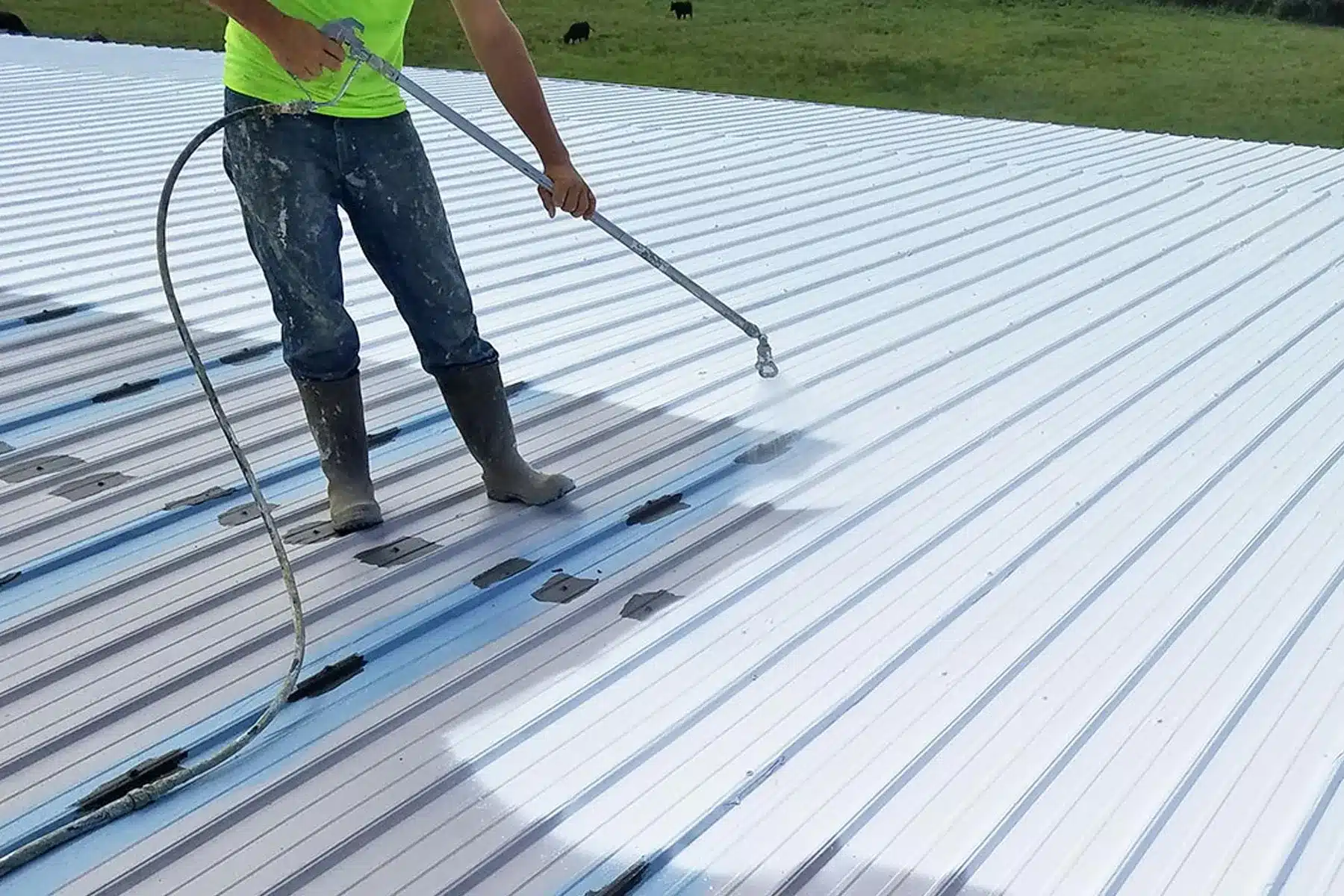
Miami's proximity to Biscayne Bay, the Atlantic, and the coastal inlets means that salt air corrosion is a roofing maintenance reality that inland markets do not share. Perimeter edge metal, drain hardware, mechanical fasteners, HVAC curbs, and termination bars all corrode faster in Miami's coastal environment than manufacturer service life projections account for. We assess the full extent of salt corrosion damage and specify replacements with materials appropriate for the marine exposure category.
Salt air corrosion is a continuous process on Miami commercial roofs, not an event-triggered damage mechanism. Every day that a steel or aluminum rooftop component sits in Miami's salt-laden marine air, the corrosion process advances — slowly on galvanized or coated components that are in good condition, rapidly on components that have exhausted their protective coating or that were never specified for marine exposure categories.
The problem is that commercial roof specifications that are adequate for an Miami or Jacksonville coastal setting are often undersized for Miami's specific marine exposure. The Beaufort scale Exposure Category C or D designation that drives the wind pressure design also correlates with salt air corrosion intensity. Buildings along the Biscayne Bay waterfront in Brickell and Edgewater, Miami Beach oceanfront properties, and any building within a half-mile of open salt water experience an order of magnitude more annual corrosion load than an inland Miami-Dade property.
We conduct salt air corrosion assessments on a scheduled basis for our maintenance contract buildings and on a triggered basis when a building owner notices visible corrosion on accessible rooftop components. The assessment covers six categories: perimeter edge metal, parapet coping, drain hardware and bodies, mechanical fasteners and termination bars, HVAC curbs and equipment support frames, and expansion joint covers. Each category is rated by corrosion severity and assigned a replacement priority.
Components Most Vulnerable to Salt Corrosion in Miami
Galvanized steel perimeter edge metal and parapet coping are the highest-replacement-frequency components in Miami coastal roofing. Galvanized zinc coating on steel edge metal provides typically 15 to 25 years of corrosion protection in inland climates. In Miami's coastal marine environment, that protection is often exhausted in 8 to 12 years on bay-facing and oceanfront buildings — and field galvanized metal or metal with field-cut edges corrodes even faster. Aluminum edge metal performs better in marine exposure than galvanized steel, but aluminum alloys that lack an anodized or PVDF coating are still subject to oxidation pitting that compromises structural integrity over time.
Rooftop drain hardware — clamping rings, dome strainers, and overflow drain bodies — corrodes in direct contact with accumulated organic material and standing water that is already corrosive before salt air adds its contribution. Cast iron drain bodies (common in older buildings) and bronze hardware are more corrosion-resistant than galvanized steel equivalents in Miami's marine environment. We specify replacement drain hardware in marine-grade materials when replacing corroded drain components.
Mechanical fasteners — the screws and plates that attach perimeter edge metal, termination bars, and flashings — are the smallest and most overlooked category of salt corrosion failure. Galvanized or carbon steel fasteners in coastal Miami exposure corrode and lose tensile strength before they are visible as a problem from the roof surface. Fastener corrosion at perimeter and corner zone attachment points directly compromises wind-uplift resistance — a corroded fastener that has lost section area may fail at a fraction of its design uplift load. We include fastener condition in the salt corrosion assessment at high-exposure buildings.
HVAC Curbs and Equipment Support Frames
Rooftop HVAC equipment in Miami's coastal environment requires more corrosion protection than standard commercial HVAC units provide. Standard galvanized steel equipment curbs and support frames corrode at rooftop elevation in coastal Miami exposure — often developing through-corrosion within 10 to 15 years on bay-facing or ocean-adjacent buildings. When an equipment curb corrodes to the point of section loss, it loses its structural capacity to support the HVAC unit above and its function as a weather-resistant base for the rooftop flashing.
Corroded equipment curbs create a secondary problem for the roof membrane. As the curb structure corrodes and distorts, the membrane flashing that runs up the vertical face of the curb is subjected to movement at the curb-membrane interface — movement that fatigues the flashing adhesion and eventually creates a water entry path at the base of the curb. We document curb condition as part of every salt air corrosion assessment and note locations where curb structural condition is compromised.
Replacement equipment curbs for high-exposure Miami coastal buildings should be specified in stainless steel or aluminum — not galvanized steel — to provide a reasonable service life in the marine exposure environment. The additional material cost of stainless or aluminum curbs is typically recovered in the extended replacement interval compared to galvanized steel replacements that will corrode in another 10 to 15 years.
NOA Compliance for Corrosion Replacement Components
Replacement perimeter edge metal, coping, and flashing systems must carry Miami-Dade NOA approvals for the complete assembly — not just for the individual component. Edge metal and coping NOA approvals specify the material, thickness, gauge, and attachment method for the approved wind-uplift resistance. When we replace corroded edge metal with a marine-grade aluminum or stainless specification, we verify that the new system has a current Miami-Dade NOA and that the installation method matches the NOA-approved detail.
We document the NOA numbers for every replacement component at closeout. This is particularly important for salt corrosion replacement work because the replacement components may differ from the original installation — different manufacturer, different material specification — and the NOA coverage needs to be verified for the specific replacement assembly, not assumed from the original installation documentation.
Frequently asked questions
How do I know if my building is in a high-salt-air-exposure category?
Miami-Dade buildings within approximately a half-mile of Biscayne Bay, the Atlantic shoreline, or any tidal inlet are in the high marine exposure category. Buildings in Brickell, Edgewater, and Miami Beach that face the bay or ocean directly are in the highest exposure subcategory. Buildings in inland Hialeah, Doral, or Kendall are in a lower marine exposure category — still above most inland U.S. markets but not at the corrosion intensity of waterfront properties. We assess exposure category as part of the salt air corrosion evaluation.
How often should a bayfront Miami commercial building have its rooftop metal inspected?
Annual inspection is appropriate for buildings on Biscayne Bay-facing or oceanfront exposures. The annual inspection catches corrosion progression before it reaches the point of section loss or structural compromise. Buildings further from direct salt water exposure — a quarter-mile or more from the bay — can run on a biennial inspection schedule as a minimum.
Does salt air corrosion of edge metal affect my roof manufacturer warranty?
Manufacturer warranties typically cover membrane manufacturing defects, not installation hardware corrosion. Edge metal, coping, and drain hardware corrosion is a maintenance issue rather than a warranty issue for the membrane system. However, if corroded edge metal creates a water entry path that damages the membrane, that secondary membrane damage may be a legitimate warranty claim depending on whether the manufacturer's warranty maintenance requirements were met. We distinguish the corrosion damage from any secondary membrane damage in our assessment.
Get a salt air corrosion assessment for your Miami coastal building.
Our project managers will rate perimeter metal, drain hardware, fasteners, and HVAC curb condition by corrosion severity and deliver a replacement priority list with marine-grade material specifications.