Leak Damage Roof Repair
Miami, FL · Damage Repair
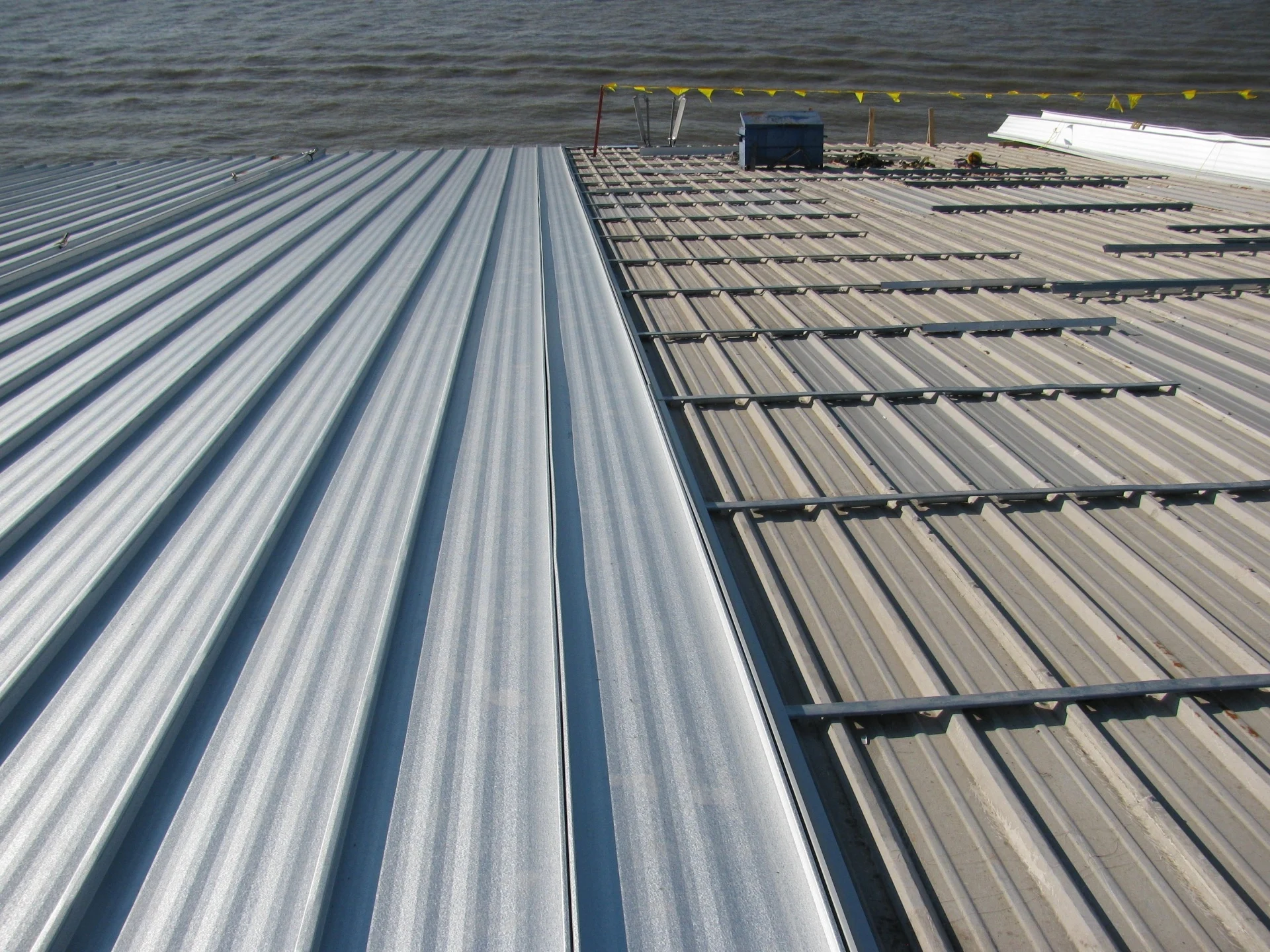
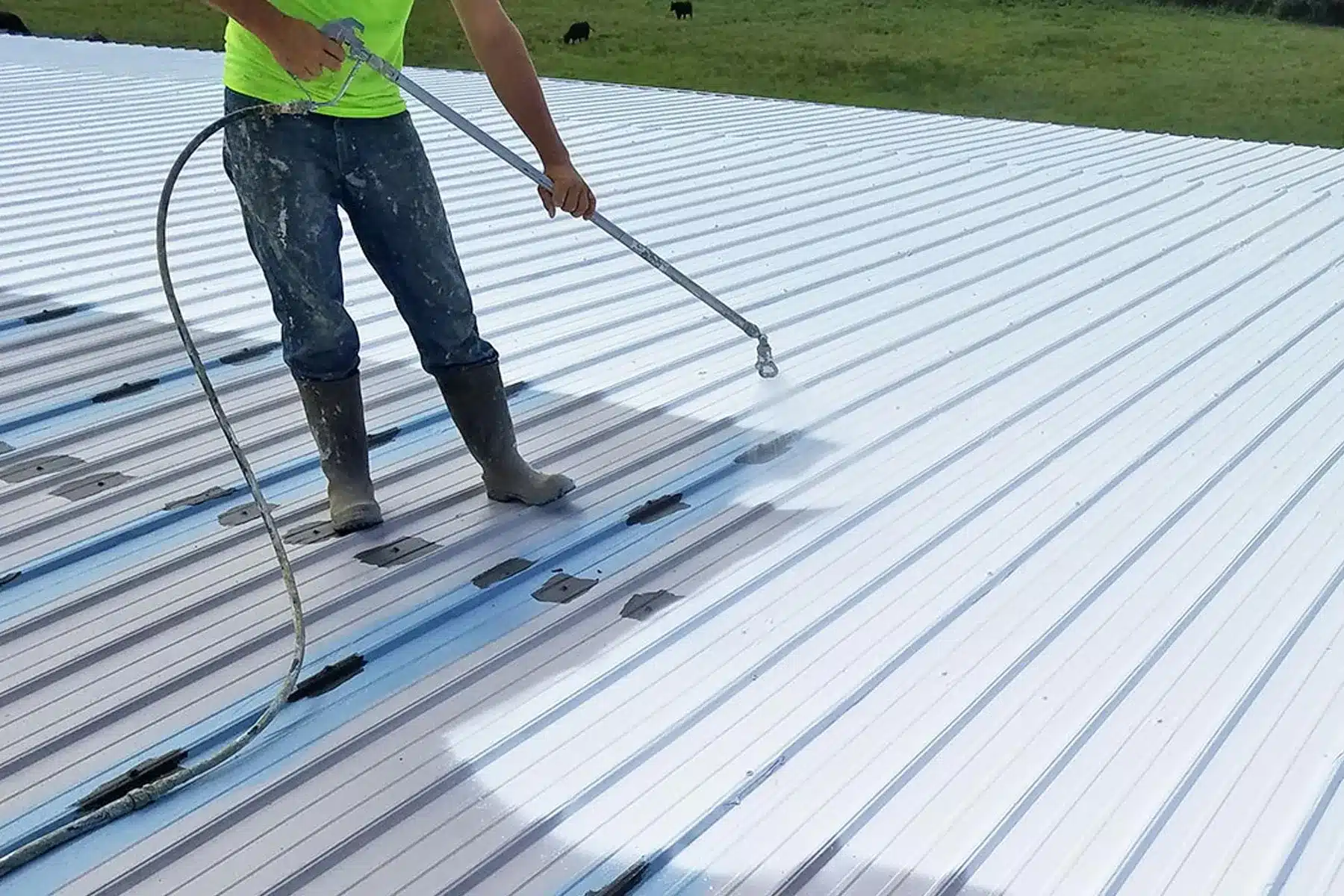
In Miami's climate, a commercial roof leak is rarely the simple problem it appears to be on the surface. Water staining on a 12th-floor ceiling may originate at a failed parapet flashing 40 feet away from the stain. An apparent roof leak in a Brickell office building may be condensation from an undersized HVAC vapor barrier, not a membrane failure. Getting the source right before running repair crews is the difference between a one-time repair and a recurring problem.
Miami's subtropical climate produces the conditions that make commercial roof leak investigation genuinely difficult. Interior humidity levels above 80 percent — common in Miami-Dade for months at a time — mean that condensation can form on cool surfaces inside a building envelope in ways that produce water staining identical to active leak patterns. The same afternoon thunderstorms that probe every flashy claim also probe every failed flashing and open penetration on every commercial flat roof in the county. And king-tide flooding that now regularly reaches Brickell and Downtown Miami-adjacent properties introduces grade-level water migration that can appear as leak patterns inside a building without any roof failure at all.
We approach commercial leak investigation in Miami as a source-identification problem before it is a repair problem. Running a crew to patch a flashing at the location closest to an interior stain — without confirming the leak source — is the standard approach that produces recurring leaks. Our investigation protocol starts with a visual inspection of the full roof surface, drain condition, and all penetrations, followed by infrared scanning where saturation patterns in the insulation are suspected, and followed by water testing at candidate sources when visual and infrared findings are ambiguous.
The written investigation report distinguishes the confirmed leak source from suspected secondary contributors and from unrelated moisture sources. A confirmed leak source gets a NOA-compliant repair scope. Suspected secondary contributors get a monitoring note. Grade-level or condensation moisture sources get a separate documentation note explaining why the roof repair alone will not resolve the interior condition.
Common Leak Sources on Miami Commercial Flat Roofs
Drain and scupper failures are the most common active leak source we document on Miami commercial roofs. Miami-Dade's heavy rainfall — particularly the intense afternoon storms of June through September, which can deposit two to four inches of rain in 30 minutes — overwhelms undersized or partially clogged drains and creates ponding that finds every imperfection in the membrane or flashing around the drain sump. Drain sumps with deteriorated clamping rings, cracked drain bodies (common in older concrete deck buildings with freeze-thaw cracking in northern markets, but also found in Miami buildings from deck movement), or failed membrane-to-drain flange seals are the primary source.
Parapet flashing failures are the second most common source. The membrane-to-parapet connection — termination bar, counterflashing, and sealant — is a detail that is exposed to direct UV, thermal cycling, and wind loading simultaneously. In Miami's coastal climate, termination bar corrosion accelerates this process. Once the termination bar loses mechanical grip or the sealant at the top edge opens, water infiltration runs behind the membrane face and migrates horizontally until it finds a path to the interior — often at a point well away from the active flashing failure.
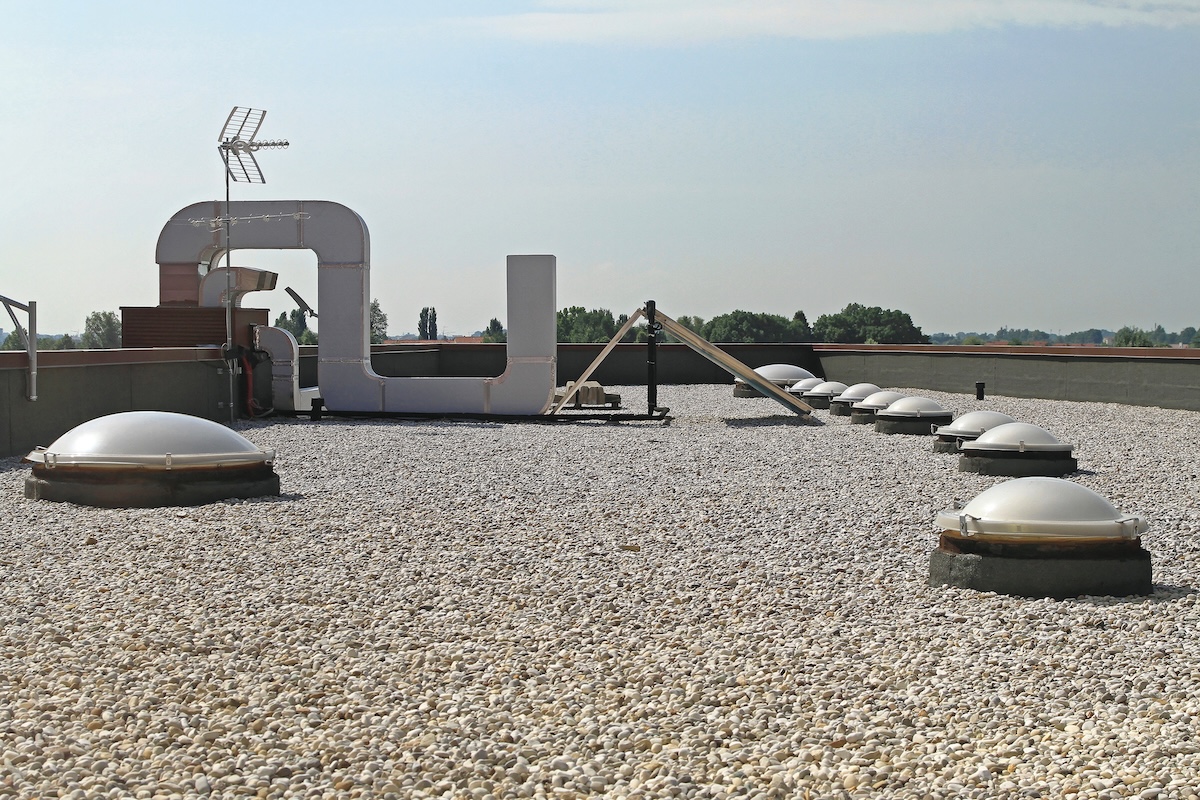
HVAC curb flashing failures are common on Miami buildings with aging rooftop mechanical equipment. Curb flashing details require the membrane to flash up the vertical face of the equipment curb and terminate under the curb cap or equipment base. When curb flashing adhesion fails — typically from repeated thermal cycling and vibration from the mechanical unit — the flashing pulls away from the curb face and creates a direct water entry path at the base of the equipment.
Leak Investigation Methods
Visual investigation begins with a full roof walk to identify candidate sources — looking for physical evidence of water pathways rather than starting from the interior stain location. Water that enters at a high point migrates downslope through the insulation stack before appearing at a low point inside the building. A ceiling stain in the middle of a floor plan may originate at a parapet flashing at the perimeter edge that is 60 to 80 feet away horizontally.
Infrared thermography, conducted after nightfall when the roof surface has cooled while wet insulation retains heat, maps moisture saturation patterns in the insulation without cutting into the roof surface. Wet insulation holds heat longer than dry insulation — infrared scanning reveals the moisture migration path from source to interior appearance point. We use this to confirm that our candidate source identification is consistent with the actual moisture distribution pattern.
Flood testing is the definitive confirmation method when visual and infrared findings identify candidate sources but do not confirm the specific failure location. We flood-test specific areas — drains, parapet sections, equipment curbs — in sequence, isolating each from adjacent areas and watching the interior for response. Flood testing in Miami requires coordination with the building's operations team to avoid damaging interior finishes or electrical components — we manage this as a planned operation with the facility manager before starting.
Repair Specifications and NOA Compliance
Every leak repair we install on a Miami-Dade commercial roof uses materials from an assembly with a current Miami-Dade Notice of Acceptance. Drain body replacement, membrane flashing patches, termination bar replacement, curb flashing reinstallation — each specifies the manufacturer product name and the active NOA number that covers the assembly combination. This documentation closes out with the repair and is delivered to the building owner.
Leak repairs that address the active failure location without addressing adjacent contributing conditions — an aged sealant bead that is open in two places, where we repair one and leave the other — will recur at the unaddressed location within the next storm cycle. Our repair scope identifies the active failure location and the contributing conditions, and gives the building owner a clear choice about whether to address both or one — with our written recommendation on which makes more long-term economic sense.
Frequently asked questions
My ceiling is stained but my roof was replaced two years ago — is this a roof warranty issue?
Possibly, but not certainly. New roof membrane installed two years ago can have active failures at the flashings even if the field zone membrane is sound. More commonly, interior staining appearing on recently replaced roofs reflects a flashing detail at a penetration or parapet that was not fully specified in the replacement scope. We will investigate and document the source — if it is a workmanship issue, we identify that in writing. If it is a subsequent event or a pre-existing condition that was documented at replacement closeout, we document that instead.
How long does a roof leak investigation take?
Visual investigation and initial infrared scan on a 50,000 square foot commercial roof takes approximately four to six hours, typically scheduled at night for infrared work. Written investigation report follows within two business days. Flood testing, if needed to confirm a specific source, is scheduled as a separate half-day operation coordinated with the facility manager.
Can I just have the most likely spot repaired without a full investigation?
We can repair a specific location you identify, but we will tell you if our visual inspection suggests the active source is elsewhere. Running a repair crew to a location that is not the active source is the most reliable way to spend money without stopping the leak. We would rather spend 30 minutes looking at the roof before pricing a repair than repair the wrong location twice.
Is the leak I am seeing during king-tide events a roof issue?
Not necessarily. King-tide flooding in Brickell and Downtown Miami now reaches street level and can migrate through foundation walls, utility penetrations, and the base of below-grade structures. Interior water staining during king-tide events that does not correspond to rain events is more likely a foundation or envelope issue than a roof issue. We document our findings and identify the likely source — if it is not a roof issue, we say so.
Get a documented leak source investigation before committing to repair.
Our project managers will conduct a full visual inspection, infrared scan, and written source report — so you are repairing the right thing the first time.