PVC Roof Systems
Miami, FL · Roof Systems

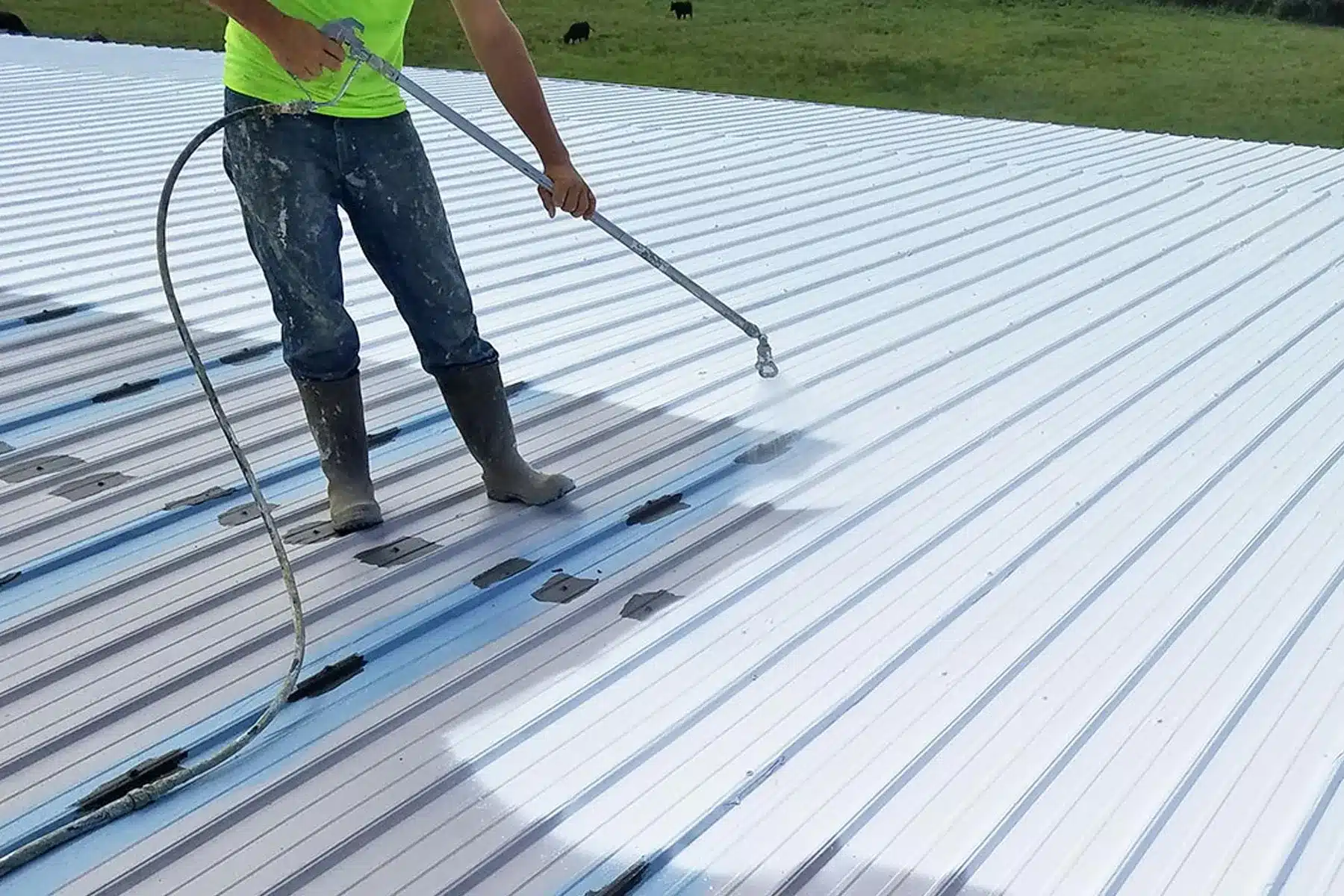
Polyvinyl chloride membrane is the correct choice for Miami commercial buildings with restaurant exhaust, grease-laden air, or chemical process exposure. It is also one of the most durable membranes available for coastal installations in the Miami-Dade HVHZ when the assembly is properly specified and the NOA covers the complete system.
Miami-Dade's restaurant, food processing, and commercial kitchen stock is one of the densest concentrations in the United States. Little Havana's restaurant row, the Brickell hospitality corridor, Wynwood's rapidly expanding food-and-beverage district, and the industrial food processing facilities clustered in Hialeah all share one roofing challenge: grease-laden exhaust air attacking the roof membrane at and downwind of kitchen exhaust penetrations. EPDM and standard TPO formulations are not resistant to the plasticizer-extracting chemistry of commercial cooking grease — they swell, soften, and delaminate at grease impact zones. PVC membrane is the code-compliant and technically correct choice for these buildings.
The PVC advantage in chemical resistance does not extend automatically to other performance categories. PVC membrane becomes less flexible as it ages in Miami's extreme UV environment — plasticizers migrate out of older PVC membranes over time, causing the membrane to become stiff and crack-prone at penetration flashings and parapets. We assess plasticizer migration in PVC inspections by checking membrane flexibility at cold temperatures and at low-light hours when the roof has cooled — a PVC membrane that cracks when bent at 60 degrees F has reached the end of its serviceable life regardless of surface appearance.
Miami-Dade's coastal salt air does not specifically attack PVC chemistry the way it attacks galvanized metal components, but the edge metal and perimeter flashing hardware on any PVC installation is still subject to the same salt corrosion that affects all coastal buildings. We specify stainless steel or hot-dip galvanized hardware at perimeter and penetration flashings on PVC installations within a half-mile of saltwater.
PVC for Restaurant and Food-Service Buildings
Grease-resistant PVC membrane is specified for any Miami building where cooking exhaust penetrates or passes over the roof surface. The grease-resistance rating is a membrane chemistry property — not all PVC membranes carry manufacturer grease-resistance certifications, and a standard PVC without that certification is not an upgrade from standard TPO for a restaurant building. We specify only PVC membranes with documented manufacturer grease-resistance ratings for kitchen-exhaust applications.
Miami's Cuban restaurant concentration in Little Havana and the density of commercial kitchens in Miami Beach's hospitality district have produced a specific inspection pattern: built-up grease accumulation around exhaust penetrations on aging TPO or EPDM roofs, with membrane delamination in a splash zone extending up to 15 feet downwind. When we spec a restaurant building reroofing, the exhaust penetration layout determines the PVC coverage zone — the entire splash zone, not just the penetration itself, receives PVC or a grease-compatible coating system.
Exhaust fan curb flashings on restaurant roofs are among the most maintenance-intensive details in Miami commercial roofing. Grease infiltration at the curb-to-membrane joint is the most common failure point, and it requires inspection at least twice per year on active restaurant buildings. Our maintenance contracts for food-service buildings include semi-annual exhaust curb inspections with documented photograph records.
PVC HVHZ Fastening and NOA Compliance
PVC systems carry Miami-Dade NOA approvals for mechanically attached and fully adhered configurations. The same three-zone ASCE 7 wind-uplift design that governs TPO and EPDM governs PVC fastener patterns. PVC is slightly more rigid than TPO, which changes the behavior at fastener plates under dynamic wind load cycling — the Miami-Dade NOA for the specific PVC assembly accounts for this difference, and we specify only NOA-approved assemblies for HVHZ use.
PVC's heat-weld seam chemistry is similar to TPO and produces seam strengths that can exceed parent membrane strength when properly executed. Unlike TPO, PVC is sensitive to welding temperature calibration — over-welded PVC seams can char or shrink, creating a stress concentration that produces seam splitting under thermal cycling. All PVC welding on our projects is performed with calibrated hot-air welders set to manufacturer-specified parameters, with temperature verification before production begins each day.
Miami-Dade NOA approvals for PVC systems require that the specific insulation substrate match what the NOA was tested with. We verify the insulation-to-membrane compatibility within the NOA before spec finalization — a PVC system installed on a substrate not covered by the NOA is not compliant regardless of the membrane's individual product approvals.
PVC Longevity in South Florida Climate
25-year manufacturer warranties are available for several PVC systems from major manufacturers — longer than the standard 20-year NDL available on most TPO systems. The longer warranty ceiling reflects PVC's chemistry stability in UV-intense environments when plasticizer migration is managed. Plasticizer migration is a function of UV exposure hours, ambient temperature, and membrane thickness — Miami's year-round sun means PVC in South Florida loses plasticizers faster than PVC in northern markets. This is why we do not downsize below 50-mil PVC for Miami commercial buildings, and we recommend 60-mil wherever budget permits.
Post-hurricane assessment on PVC roofs focuses on the same corner and perimeter zones that dominate TPO and EPDM failures, but also on penetration flashings where PVC's relatively lower flexibility can create tear initiation points under dynamic uplift. We document penetration flashing condition in every post-event inspection on PVC roofs and compare against our pre-event condition photographs for the building.
Frequently asked questions
Is PVC worth the premium over TPO for Miami restaurants?
Yes, without reservation, for buildings with active commercial kitchen exhaust over the roof. The grease chemistry that attacks TPO and EPDM does not affect PVC. A failed TPO or EPDM roof membrane under a restaurant exhaust penetration requires emergency repair or replacement that typically costs more than the premium for PVC at initial installation. The right time to specify PVC on a restaurant building is at installation — not after the first grease-related membrane failure.
Can PVC be welded over existing TPO or EPDM?
PVC and TPO are both thermoplastic and are chemically incompatible — PVC cannot be heat-welded to TPO membrane. At transition flashings where PVC meets an adjacent TPO field (for example, a PVC grease-zone insert set into an existing TPO roof), the transition requires a taped mechanical connection with manufacturer-approved transition strip — not a heat weld. We document every PVC-to-other-system transition at closeout because these transitions are the most common leak initiation point on mixed-system installations.
How do I know if my PVC roof is losing its plasticizers?
Signs of advanced plasticizer loss: the membrane surface feels chalky or hard rather than slightly pliable, surface cracks appear at penetration flashings or parapet tie-ins, or the membrane shrinks visibly away from termination edges. The field test is to attempt a bend at a penetration flashing at a cool time of day — a membrane that cracks when bent has lost critical plasticizer content. We document plasticizer condition as part of every PVC inspection and note it as a replacement timeline driver.
What Miami-Dade NOA documentation will I receive at closeout?
Our PVC closeout package includes: the specific NOA number for the PVC assembly as installed (membrane, insulation, cover board, and attachment method), the manufacturer's warranty certificate with the NDL limit and annual maintenance requirements, the Miami-Dade building department certificate of completion, a photo-keyed zone diagram showing perimeter and corner zone fastener patterns, and our maintenance contract confirming the first scheduled inspection date.
Get a PVC specification for your Miami restaurant or commercial kitchen building.
Our project managers will assess grease-exposure zones, existing membrane condition, and HVHZ design pressures — and produce a written PVC scope with active NOA documentation.