PVC Roofing
Miami, FL · Services
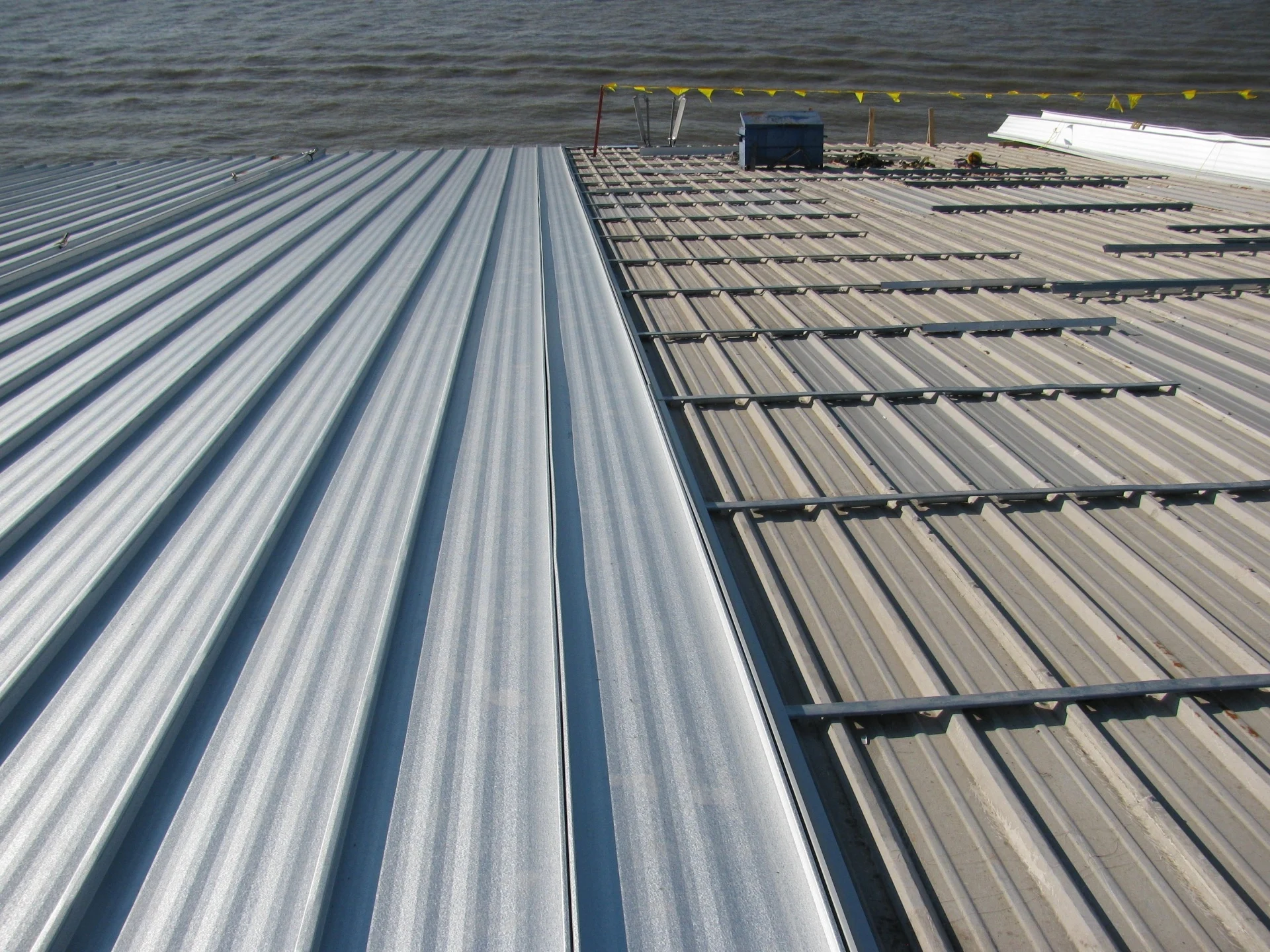
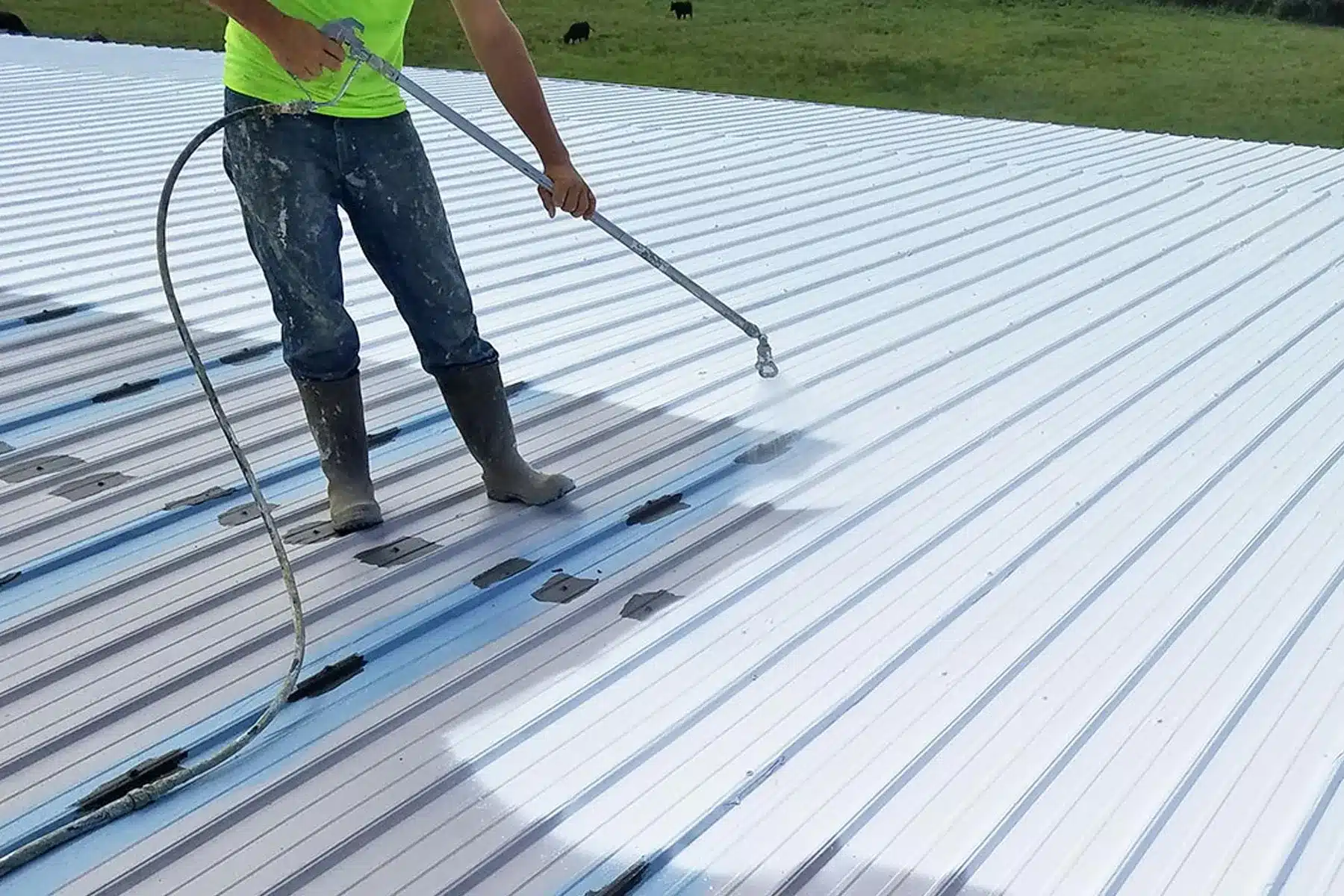
PVC membrane is the correct specification for Miami commercial buildings where rooftop drainage carries fats, oils, and grease from kitchen exhaust — or where chemical discharge, industrial solvents, or petroleum products reach the roof surface. TPO and EPDM degrade rapidly under chemical exposure that PVC handles without compromise.
PVC roofing's chemical resistance is the primary reason it is specified over TPO or EPDM on specific building types. In Miami's commercial market, the restaurant and food-service segment — from the Miami Beach hotel cluster's kitchen-heavy rooftops to the fast-casual restaurant strip on Aventura's Biscayne Boulevard corridor — represents the highest-concentration PVC application environment. Fat and grease from rooftop exhaust fans attack TPO and EPDM membranes at the molecular level, causing plasticizer migration and membrane brittleness that leads to cracking within 5 to 8 years. PVC is engineered for chemical resistance and maintains its performance characteristics under the same exposure.
We install 50-mil and 60-mil PVC systems for Miami commercial buildings, with 60-mil as the standard for new installations and 50-mil for recover applications where NOA approval covers the reduced thickness over the specific substrate. PVC's heat-welded seams — produced by hot air welding at the lap — are the strongest seam type in single-ply roofing when properly executed. In Miami's climate, where thermal cycling amplitude is high and seam performance is critical over the building's service life, heat-welded seams outperform adhesive-bonded EPDM laps over a 20-year horizon.
Miami-Dade NOA coverage for PVC systems is mandatory for every installation. PVC NOAs cover the complete assembly — membrane thickness, insulation type, attachment method, and perimeter securement — and specify the wind-uplift test data that supports compliance with FBC HVHZ requirements. We install only PVC assemblies with current Miami-Dade NOA approvals and document the NOA number at permit submission and closeout.
PVC Applications in Miami's Commercial Market
Miami Beach hotels along Collins Avenue, Ocean Drive, and Washington Avenue represent one of the highest-concentration PVC applications in the South Florida market. Hotel kitchens run 12 to 16 hours per day, and the exhaust grease load that reaches the roof surface around kitchen exhaust fan bases accumulates rapidly. Many Miami Beach hotel roofs that were originally specified as TPO are showing early-stage chemical degradation at kitchen exhaust locations within 8 to 12 years. We have converted several Miami Beach hotel roof sections from degraded TPO to PVC at kitchen exhaust zones — either as targeted patch replacement or as full-roof resystems where the chemical exposure coverage area is too large for targeted repair.
The Doral logistics corridor includes food-processing and cold-storage facilities that also specify PVC for chemical resistance. Cold-storage buildings add a second specification factor: the temperature differential between the building interior and the Miami summer exterior creates condensation management challenges that affect insulation specification in ways that do not apply to standard commercial office buildings. We assess cold-storage building insulation stacks for vapor-drive compliance in addition to the standard NOA and wind-uplift requirements.
Hialeah's industrial base includes light manufacturing and light chemical processing facilities where PVC is the membrane of choice for solvent and chemical resistance. For these buildings, the chemical resistance specification is combined with FBC HVHZ wind-uplift requirements that are standard for all Miami-Dade commercial construction — the PVC system must carry a Miami-Dade NOA that covers both the chemical resistance profile and the wind-uplift assembly.
PVC Installation in Miami's Climate
PVC heat-welding parameters are sensitive to ambient temperature and humidity. In Miami's summer months — June through September — ambient temperatures on the roof surface routinely exceed 120 degrees F during peak afternoon hours. Hot-air welder temperature settings must be adjusted for ambient conditions to achieve proper weld temperature at the seam interface without overheating the membrane. Our crews are trained to check and adjust welder settings at regular intervals throughout the production day and to verify seam quality with a probe tool on every seam before moving to the next section.
PVC membrane is more sensitive to wintertime cold than TPO — PVC becomes stiffer at lower temperatures, which affects handling and seam quality. In Miami, true cold-weather PVC installation is rare (Miami's record low is 26 degrees F), but cool mornings from December through February can bring conditions where PVC flexibility is reduced enough to affect installation quality. We monitor morning temperatures during winter months and adjust installation start times accordingly.
Flashings at penetrations and parapets on PVC systems are fabricated from the same PVC membrane material as the field membrane — heat-welded to the field membrane to create a continuous weld. This is one of PVC's installation advantages over EPDM: all seams, including flashings, are heat-welded rather than adhesive-bonded, creating a more uniform and inspectable seam quality.
PVC Repair and Long-Term Performance
PVC membrane repair in Miami uses the same heat-welding equipment as new installation — patch material is welded to the existing membrane rather than bonded with adhesive. This means PVC repair quality matches new installation quality when properly executed, unlike EPDM adhesive patch repairs which are inherently a different material system than the original bonded seams.
PVC's long-term performance in Miami's UV environment is its primary vulnerability relative to EPDM. PVC plasticizers migrate out of the membrane under prolonged UV exposure, causing the membrane to become brittle over time. This process is slower in 60-mil than in 50-mil membrane, and it is partially addressed by UV-stabilized PVC formulations that most manufacturers now use in their current products. We document the installed PVC formulation at closeout — standard versus UV-stabilized — so future project managers have the information needed to set realistic replacement horizon expectations.
Frequently asked questions
Why is PVC recommended over TPO for Miami Beach hotel roofs near kitchen exhaust?
Fats, oils, and grease from kitchen exhaust fans attack TPO membrane's chemistry — causing plasticizer migration and membrane brittleness that leads to cracking and waterproofing failure within 5 to 10 years of exposure. PVC is engineered for chemical resistance and does not degrade under the same grease exposure. For Miami Beach hotels where kitchen exhaust fans discharge onto the roof, PVC is the correct specification at and around exhaust discharge zones.
Do PVC roofing systems carry Miami-Dade NOA approvals?
Yes. Major PVC manufacturers — Sarnafil, Versico, Carlisle, and others — carry active Miami-Dade NOA approvals for their commercial PVC systems. As with all Miami-Dade roofing products, the NOA covers the complete assembly: membrane thickness, insulation, attachment method, and perimeter securement. We install only PVC systems with current Miami-Dade NOA approvals.
How long does PVC roofing last in South Florida?
60-mil UV-stabilized PVC with a Miami-Dade NOA installation and documented annual maintenance typically achieves 20 to 25 years of service life. The plasticizer migration process that limits PVC longevity is slower in current UV-stabilized formulations than in legacy products. Miami's UV intensity accelerates this process compared to northern markets, which is why we document the installed formulation and set realistic expectations at project closeout.
Can you install PVC on a Coral Gables Class A office building?
Yes. PVC is appropriate for any Miami commercial building where the specification requirements (chemical resistance, heat-welded seams, 20-plus-year warranty) match the project. In the Coral Gables Class A office market, PVC is less commonly specified than TPO — the chemical resistance advantage is not relevant for standard office use, and TPO's cost advantage over PVC narrows the specification justification. We specify the membrane that fits the building's specific conditions.
Is PVC the right membrane for your Miami commercial building?
We assess building use, chemical exposure, deck condition, and NOA coverage before specifying a PVC system — and we install only assemblies with current Miami-Dade product approvals.