EPDM Roof Systems
Miami, FL · Roof Systems

Ethylene propylene diene monomer membrane has a track record in South Florida that predates modern TPO by two decades. Buildings on Miami Beach, Brickell, and the Coconut Grove commercial corridor are running 1990s EPDM systems that survived both Irma and Andrew and are only now reaching end of first life. That longevity is real — but it depends on the installation details that Miami's coastal environment punishes hardest.
EPDM earned its place in Miami-Dade commercial roofing because of one physical property that matters more in South Florida than almost anywhere else: its flexibility at high and low temperatures. Miami rooftops hit 160-plus degrees F in mid-summer and occasionally drop below 40 degrees F during January cold fronts. The thermal cycling between those extremes causes roof membranes to expand and contract at fasteners, seams, and penetration flashings. EPDM's elastomeric chemistry accommodates that movement without the seam brittleness that can affect some TPO formulations at temperature extremes.
Where EPDM performance is most commonly compromised in Miami is at adhesive lap seams on older fully adhered systems. Seam adhesives from 1990s-era EPDM installations — particularly the solvent-based contact cements used before LVOC adhesive requirements — are now well past their designed service life. Post-Irma inspection identified lap seam adhesive failure as a significant contributing factor in EPDM roof damage across Miami-Dade. Buildings running 1990s EPDM should have lap seam condition assessed before the next hurricane season.
Current EPDM installations in Miami use self-adhering seam tape systems or two-sided bonding tape at all lap seams — not contact cement. Miami-Dade NOA approvals for EPDM assemblies specify the seam method, and we verify that the seam method on a proposed installation matches the NOA before field work begins. Salt air accelerates degradation of any seam that was not completed to spec — bayside and oceanside buildings get seam inspection every two years on our maintenance contracts.
60-Mil EPDM in Miami-Dade's HVHZ Environment
We specify 60-mil EPDM as the minimum for Miami commercial installations. 45-mil EPDM still carries some manufacturer warranties and some older Miami-Dade NOA approvals, but the thinner membrane's performance under the combined stress of Miami's UV exposure, hurricane-season thermal cycling, and rooftop foot traffic does not justify the cost savings at installation. The NDL warranty on 60-mil systems also reflects the manufacturer's higher confidence in the thicker membrane in aggressive climates.
Ballasted EPDM systems — where stone ballast rather than mechanical fasteners holds the membrane — are technically permissible in some Miami-Dade NOA configurations, but the structural loading implications and the practical hurricane risk of stone becoming projectile during extreme wind events make ballasted EPDM a system we do not specify for Miami buildings. Mechanically attached and fully adhered systems are the appropriate installation methods for HVHZ applications.
EPDM's black surface color presents a heat island consideration in Miami. Surface temperatures on uncoated black EPDM in South Florida mid-summer routinely exceed 165 degrees F, which accelerates membrane aging and increases cooling load on the building. We evaluate elastomeric reflective topcoat systems over EPDM where the building's energy analysis supports the upgrade — several elastomeric coatings carry Miami-Dade NOA approvals as topcoat systems over existing EPDM substrates.
Penetration Flashing and Parapet Details for Coastal Buildings
Penetration flashings are where EPDM installations fail first in the Miami coastal environment. EPDM boot flashings around pipe penetrations, HVAC curb flashings, and parapet wall tie-in details are all exposed to the combined stresses of UV, ozone (which is particularly elevated in Miami's ocean air), salt spray, and thermal cycling. We use manufacturer-supplied EPDM flashing boots and self-flashing pourable sealer on all penetrations — field-cut EPDM patched over penetrations without manufactured flashing components is not an acceptable detail for HVHZ installations.
Parapet wall termination flashings on EPDM installations require mechanically fastened termination bars with appropriate sealant — the FBC HVHZ requires that termination bar fastener patterns resist the same wind uplift design pressures as the field membrane attachment. Buildings with parapet copings that are corroded or detached are at elevated risk of parapet flashing failure during hurricane-force wind, because the coping hold-down is part of the system's uplift resistance chain.
Oolite limestone — the sedimentary subbase material underlying most of Miami-Dade County below fill layers — produces differential settlement patterns in buildings constructed over variable fill depth. Buildings along the bay, on reclaimed land in Miami Beach, and in areas with significant historical fill can see parapet cracking and building joint movement that is unrelated to roof performance but creates open flashings at the membrane-to-parapet connection. We document movement patterns in EPDM inspections and specify flexible flashing details at locations where cracking or movement is observed.
EPDM Recover and Restoration Options
Recover of existing EPDM with a new EPDM or TPO system is permissible under FBC for buildings that have only the original single-ply membrane — no prior recovery layer. The recover decision depends on moisture-core results: more than 25% wet cores means wet insulation, and recovering wet insulation traps moisture, creates a mold environment in Miami's ambient humidity, and voids the new manufacturer warranty. We pull cores at five to ten representative locations before any EPDM recover scope is finalized.
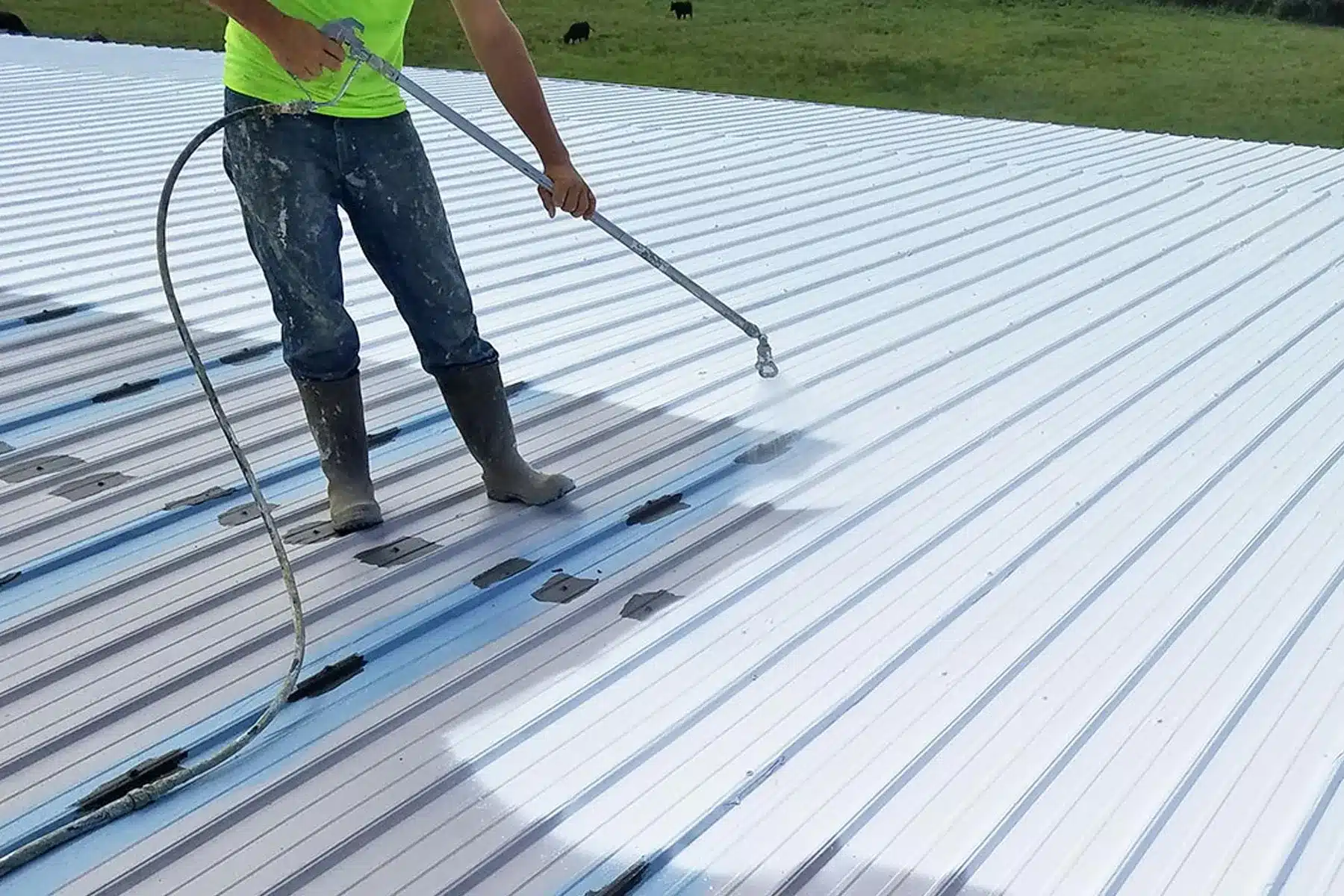
Fluid-applied elastomeric restoration over sound EPDM substrates is a cost-effective alternative to full recover where the EPDM is in good structural condition but has lost its reflective properties or has early-stage seam delamination at isolated locations. Several fluid-applied systems carry Miami-Dade NOA approvals for application over EPDM — the NOA specifies the substrate condition requirements, the application rate, and the coating manufacturer. We do not apply restoration coatings over EPDM that has structural deficiencies — the coating addresses surface degradation, not underlying installation or insulation problems.
Frequently asked questions
How do I know if my 1990s EPDM roof survived Irma without damage?
Post-Irma lap seam adhesive failure in 1990s-era EPDM is not always visible from the roof surface. Failed lap seams may appear bonded on the surface while allowing water infiltration along the seam edge during rain events. The definitive test is a probe inspection at representative lap seams — a probe (using a thin metal tool run along the seam edge) detects seam edge delamination that is not visible on the surface. We include probe testing of lap seams on any EPDM roof inspection for a building that ran through Irma, and we document the results with photographs.
Does EPDM meet Miami-Dade's NOA requirements?
Yes — there are active Miami-Dade NOA approvals for numerous EPDM assemblies. The NOA is assembly-specific: it covers the EPDM membrane product, insulation type, cover board, and attachment method as a combined system. Not every EPDM product from every manufacturer carries a current Miami-Dade NOA. Before specifying any EPDM installation, we verify that an active NOA exists for the complete assembly, and we document the approval number in the permit application and closeout.
What is the service life of EPDM in Miami's climate?
60-mil EPDM with documented annual maintenance on a Miami building typically achieves 20 to 30 years of service life — the elastomeric chemistry is resistant to the ozone exposure that is elevated in Miami's coastal air, and it handles Miami's thermal cycling better than some competing membranes. Black EPDM surface temperatures in Miami mid-summer accelerate oxidation, which is why we assess reflective topcoat options. Coastal buildings with consistent salt spray exposure should be inspected every two years rather than annually.
Can you match and patch existing EPDM without full replacement?
Yes, for isolated damage areas where the substrate and insulation are dry and the surrounding membrane is in structurally sound condition. We use manufacturer-supplied EPDM patch kits — self-adhering EPDM patches with peel-and-stick seam tape that bonds directly to the existing membrane. The patch repair is covered by the manufacturer's repair warranty, not the installation warranty, and it does not restart the service life clock. If more than 10% of the roof area requires patching, we recommend a full condition assessment to determine whether a systematic recover or replacement scope is the better capital decision.
Get an EPDM condition assessment or replacement scope.
Our project managers will inspect seam condition, penetration flashings, and parapet details — and give you a written report that covers NOA compliance status, repair priorities, and the recover-versus-replace decision.