Manufacturing Facility Roofing
Miami, FL · Services
Commercial roofing for manufacturing plants, assembly facilities, and industrial buildings throughout Miami, FL.
Medline Industries' South Florida distribution hub and the network of pharmaceutical manufacturing, medical device production, and food processing facilities operating in Miami-Dade County's industrial corridors — including the Medley and Doral industrial zones — represent the anchor of Miami's manufacturing and industrial roofing market. Ryder System's fleet maintenance and logistics operations, along with cargo handling facilities at Miami International Airport, add to a demanding industrial base that operates under the specific roofing requirements of Florida's High-Velocity Hurricane Zone.
Process equipment installation on Miami's industrial rooftops is governed by Florida's stringent product approval requirements in a way that sets this market apart from virtually every other U.S. industrial roofing environment. The Florida High-Velocity Hurricane Zone (HVHZ) — which covers Miami-Dade and Broward counties — requires that all rooftop equipment, equipment curbs, and anchoring systems carry specific Miami-Dade NOA (Notice of Acceptance) approvals. Equipment that is code-compliant in every other U.S. state may be non-compliant in Miami-Dade without a current NOA. Contractors and facility managers who are not familiar with this requirement regularly encounter costly corrections during inspection.
Chemical fume and vapor exposure at Miami's pharmaceutical and food processing facilities requires careful membrane selection, as it does in any major manufacturing market. The additional dimension in Miami is that rooftop membrane systems must simultaneously meet Miami-Dade's hurricane wind uplift requirements and the chemical resistance standards appropriate for the facility's manufacturing processes. These dual requirements narrow the field of compliant membrane assemblies and require contractors to work through product approval documentation carefully rather than defaulting to the membrane systems they use most frequently in the general commercial market.
Vibration from Miami's industrial facilities is an important design consideration at heavy distribution and cargo handling operations, where large forklift fleets, automated conveyor systems, and heavy loading dock equipment transmit cyclic loads into the building structure. Miami's industrial real estate market has seen significant investment in high-bay logistics facilities in Doral and Medley that use steel frame construction with metal deck roofs. Vibration assessment at these facilities should be conducted before finalizing fastening system designs, with particular attention to high-cycle areas near automated conveyor crossings and loading dock equipment rooms.
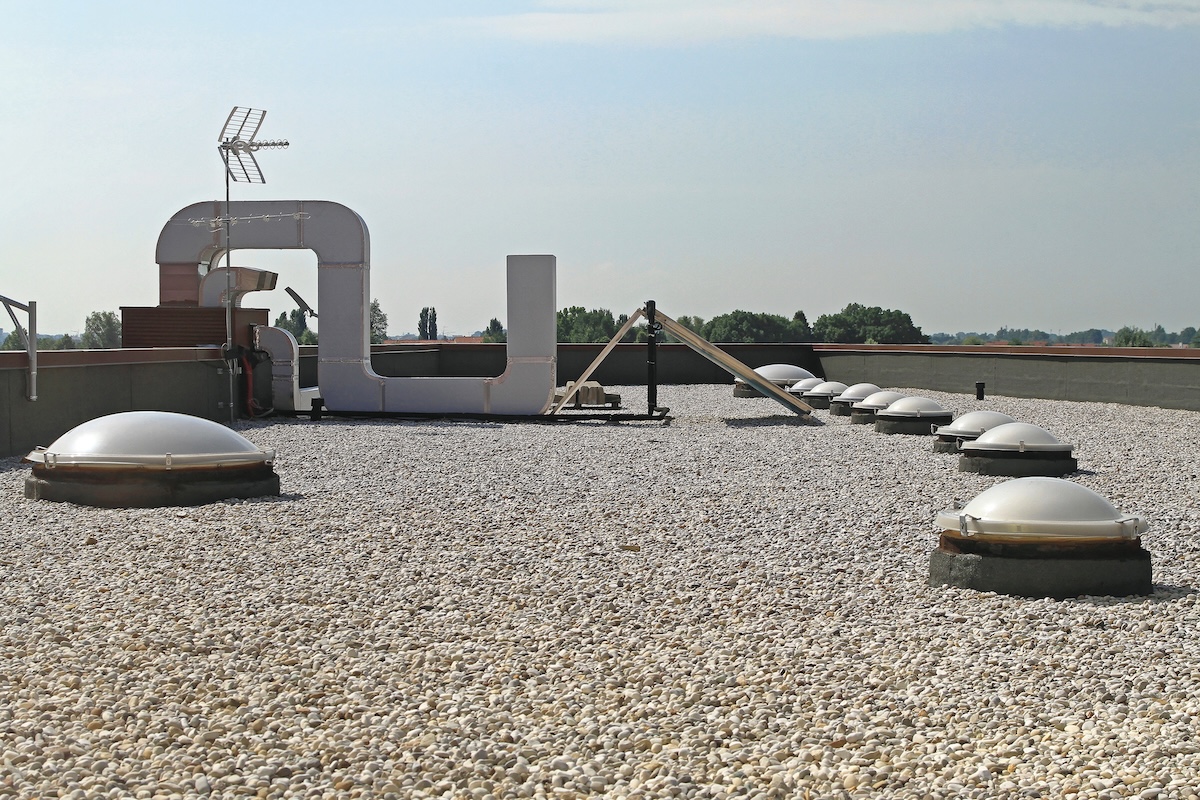
Skylights on Miami's industrial buildings are subject to the same HVHZ product approval requirements as other rooftop assemblies. Impact-resistant skylight assemblies with current Miami-Dade NOA documentation are required for all new and replacement skylight installations in Miami-Dade County. The HVHZ requirements for impact resistance, wind pressure ratings, and installation methodology for skylights are among the most demanding in any U.S. jurisdiction, and the product selection for compliant assemblies is significantly more limited than in non-HVHZ markets. Contractors who specify and install non-approved skylights in Miami-Dade can face stop-work orders and installation removal requirements.
Schedule coordination at Miami's pharmaceutical and food processing facilities is complicated by the regulatory oversight that governs these industries. FDA-regulated manufacturing facilities must maintain continuous documentation of facility conditions and any construction activity that could affect production or product safety. Roofing contractors working adjacent to or above FDA-regulated production areas must participate in the facility's change control process, provide written activity notifications, and follow facility-specific access protocols. This regulatory layer adds time and administrative cost to roofing projects at Miami pharmaceutical facilities that must be budgeted accurately at the proposal stage.
Miami's tropical climate creates the most demanding roofing environment of any major U.S. industrial market. Summer heat indices regularly exceed 110°F, rooftop surface temperatures on dark membranes can reach 175°F during afternoon peaks, and the combination of intense UV radiation, high humidity, and hurricane-force wind loads creates stresses that eliminate inferior roofing systems within their first few years of service. Only roofing systems that are properly specified for the Miami climate — including appropriate wind uplift design, UV-resistant membrane surfaces, and moisture management details that account for Miami's extreme rainfall — deliver the service lives that facility owners expect.
Hurricane preparedness planning for Miami's industrial facilities must include roof asset management as a core component. The replacement cost of a large industrial roofing system in Miami is a significant capital exposure, and a well-maintained, properly installed system that carries appropriate Miami-Dade certifications is far more likely to survive a hurricane impact with repairable rather than catastrophic damage. Facilities managers who develop pre-hurricane inspection checklists, maintain current roof condition assessments, and ensure that their roofing contractor has the equipment and labor capacity to respond quickly after a storm pass consistently recover faster than those who have deferred maintenance on aging systems.
The long-term growth of Miami's logistics and industrial real estate sector, driven by South American trade flows through Miami International Airport and PortMiami, creates strong investment interest in Miami industrial roofing from both owner-operators and institutional landlords. The HVHZ compliance requirement, while burdensome in some respects, creates a de facto quality floor that reduces the incidence of the low-cost, non-compliant roofing that drives up operating costs on industrial properties in less regulated markets. Facility owners who understand and embrace HVHZ compliance as a value driver rather than a cost burden are better positioned in Miami's competitive industrial real estate market.
Frequently asked questions
Is built-up roofing still installed on new Miami commercial buildings?
Rarely on new construction. BUR has largely been replaced by TPO and PVC single-ply membranes for new commercial low-slope construction in Miami-Dade. Modified bitumen — a close relative of BUR using polymer-modified asphalt plies — is still specified for specific applications, particularly in recover configurations and on buildings where foot traffic and mechanical abuse favor the thicker ply system. We install and maintain both BUR and modified bitumen on existing buildings but rarely specify BUR for new construction.
How do I know if my 1980s Miami office building's BUR system is still viable?
A moisture survey is the starting point — either electronic moisture probing or infrared thermography. If insulation saturation is below 25 percent by area and the deck is sound, a recover with targeted wet-area removal and a new mechanically attached membrane or modified bitumen cap is often viable. If saturation is widespread or the deck is deteriorated, replacement is the honest scope. We provide the moisture survey data and the deck inspection findings as part of the assessment so the decision is based on documented condition rather than a contractor's estimate.
Can a BUR system be recovered with TPO in Miami-Dade?
Yes, when the BUR substrate is dry, the deck is sound, and an NOA-approved recover assembly exists for the specific BUR type and TPO system combination. We verify the NOA approval before designing the recover specification. Not all TPO manufacturer systems have Miami-Dade NOA approvals for BUR recover configurations — the approval list is assembly-specific.
What is the typical service life of a Miami BUR system?
A well-installed BUR system in Miami conditions typically provides 20 to 30 years of service life before significant rehabilitation is required. Miami's high UV intensity, surface temperatures exceeding 160 degrees F, and coastal salt environment accelerate asphalt oxidation and ply adhesion degradation relative to inland markets. Pre-1992 Miami BUR systems that are now 30-plus years old and have not been recovered or significantly repaired are generally past viable service life.
Get a documented BUR condition assessment for your Miami building.
Our project managers will conduct a moisture survey, pull cores at suspect locations, inspect deck condition, and deliver a written report with recover-versus-replace recommendation and cost basis — before any commitment to a scope.