Commercial Roof Repair
Miami, FL · Services
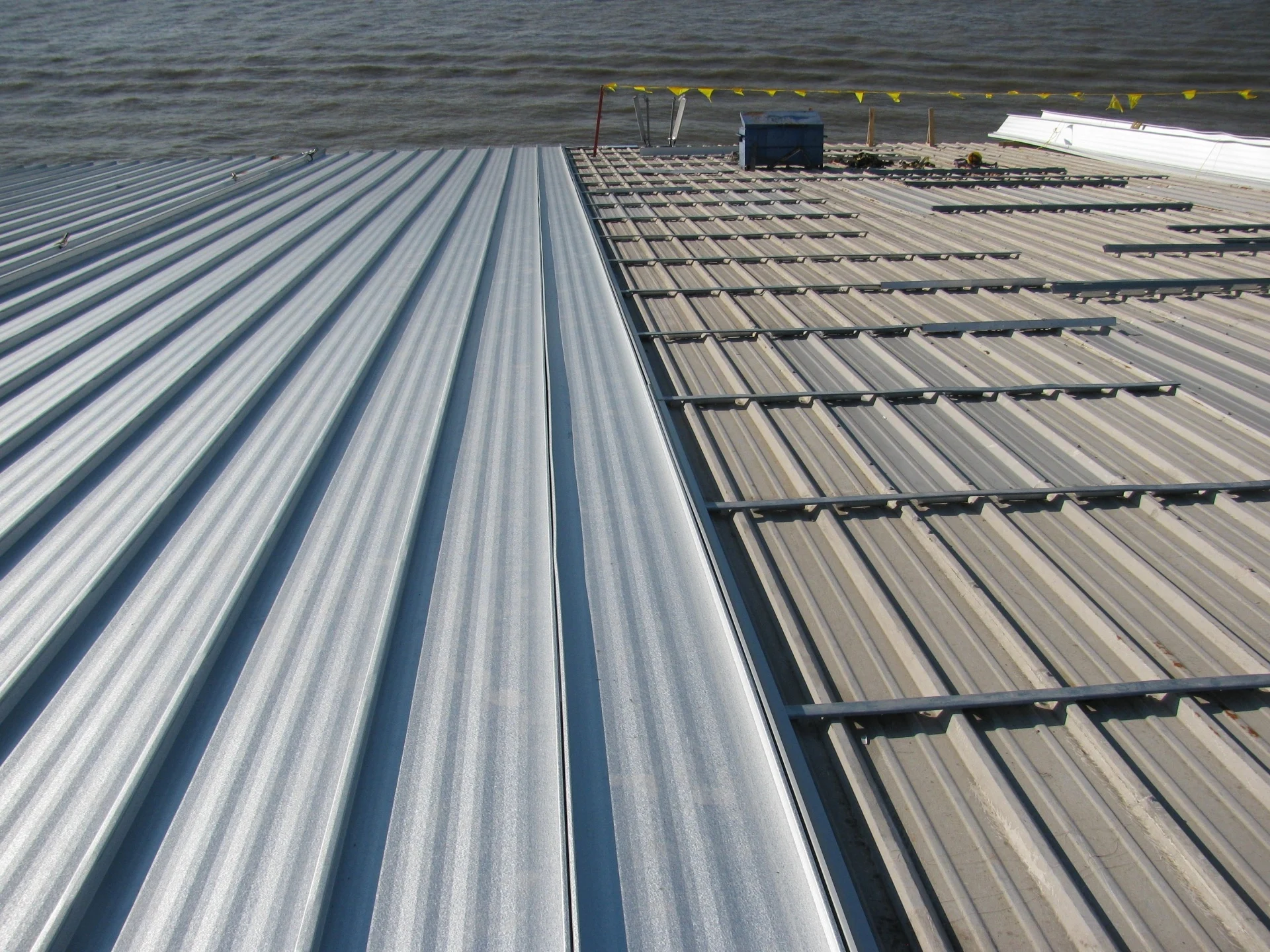
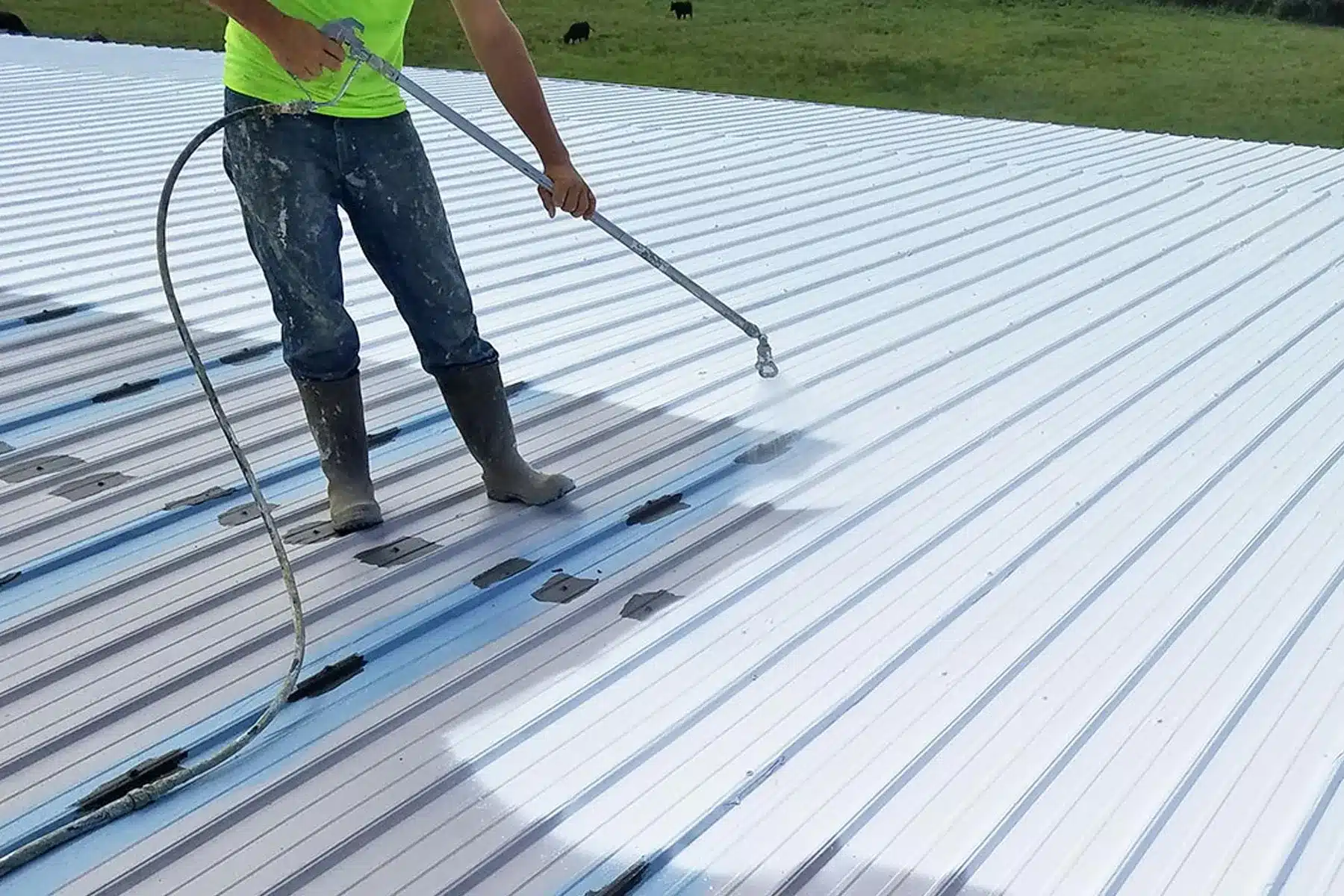
The scope documents leak sources, repair boundaries, photos, and priorities so Miami owners can separate immediate stabilization from longer-term capital work. Roof repair in Miami has to be approached differently than in most markets. Every repair we install on an NOA-approved assembly needs to maintain the assembly's compliance profile — or the warranty that covers the rest of the roof is at risk. We document every repair against the existing NOA approval before we start cutting.
Most commercial roof leaks in Miami have a simple physical cause — a failed flashing, a blocked drain, a lap seam that separated under thermal cycling — but identifying the right cause before opening the membrane is where Miami repair work separates from guesswork. Our project managers walk every roof before we issue a repair quote. No photo review, no satellite scope, no estimate without a roof walk.
Miami's climate loads on commercial roofing materials are different from what the manufacturer's warranty projections assume. The combination of 180 UV index readings from June through September, surface temperatures that exceed 165 degrees F on dark membranes, high humidity on the underside of the membrane, and salt air at bay-adjacent properties in Brickell, Edgewater, and along Biscayne Boulevard accelerates membrane degradation faster than the manufacturer's inland test data predicts. A repair that would last five years in Hialeah may need reassessment in two years in Miami Beach. We account for that in how we scope repairs.
We install repairs only with materials that are either within the existing assembly's NOA approval or are specified by the manufacturer as repair materials for that assembly. Installing an incompatible patch membrane — even a high-quality one — over an NOA-compliant system can void the warranty on the remaining roof surface. We confirm compatibility before every repair.
Common Failure Modes We Repair in Miami Commercial Buildings
Perimeter and corner flashing failures are the most common repair category on post-Andrew commercial roofs in Miami-Dade. The FBC HVHZ perimeter metal edge and coping systems installed from the mid-1990s through 2005 — when the revised NOA system was still relatively new and field inspection was inconsistent — were often undersized or under-fastened for actual hurricane-season wind loads. When Hurricane Irma crossed Miami-Dade in 2017 with sustained winds of 130 mph, the buildings that showed perimeter flashing failures were disproportionately in that mid-1990s to 2005 construction window. We identify and document these perimeter conditions during repair walks and scope the correction to current FBC HVHZ standards.
Roof drain and overflow drain failures account for a significant fraction of interior water intrusion calls in the Downtown Miami and Miami World Center office inventory. Miami's afternoon thunderstorms from June through October can deliver 2 to 3 inches of rain in 30 minutes — a load that even properly functioning roof drains struggle with if the sumps are partially blocked with debris from rooftop HVAC equipment. We clear drain sumps, inspect internal drain bowls for corrosion, and reseal drain flashing collars to the membrane using manufacturer-specified materials for the existing assembly.
Lap seam failures on TPO and EPDM membranes are the third major repair category in the Miami commercial inventory. Heat-welded TPO lap seams that were not achieved at the correct temperature during installation — or that were re-rolled on a second attempt without proper preparation — show delamination at the seam edge within 5 to 10 years under Miami's thermal cycling. We probe lap seams on all membranes older than 10 years as part of a repair walk, because a lap seam failure discovered during a repair visit is far less expensive to address than one that presents as an interior ceiling stain on the 14th floor of a Brickell tower after a summer storm.
NOA Compliance and Repair Documentation
Miami-Dade's NOA system creates a documentation obligation for repair work that does not exist in most other markets. A repair that introduces materials or attachment methods not covered by the existing NOA — or that modifies the membrane attachment in a corner or perimeter zone in a way that reduces fastener density below the designed wind-uplift pattern — puts the entire assembly's NOA compliance at risk. We document the existing assembly's NOA number before scoping any repair, verify that our repair materials are within that NOA's coverage, and note any repair that introduces a deviation from the original assembly in writing.
For buildings where the original installation documentation is not available — common in the Hialeah industrial corridor and in older Downtown Miami commercial buildings that have changed ownership multiple times since original construction — we start the repair process with a membrane identification survey: core sample, manufacturer identification from markings on the back face of the membrane, and verification of the NOA history for that manufacturer's product. Without this step, there is no defensible basis for material selection on the repair.
Every repair we complete gets a photo log keyed to a roof zone diagram, a written description of materials used and attachment method, and a recommendation on the remaining life of the surrounding membrane. That documentation is what a building owner needs when they are deciding between continued repair investment and a planned replacement on a capital schedule — and it is what a manufacturer warranty desk requires when a warranty claim follows a repair.
Oolite Limestone Subbase and Differential Movement
Miami-Dade sits on oolite limestone — a sedimentary rock formation that underlies the fill layers across most of the county. In areas where significant fill depth covers the limestone subbase, particularly along the bay in Brickell and in the low-elevation areas of Miami Beach, buildings can show differential settlement that creates movement at parapet walls and building expansion joints. This movement shows up as recurring flashing failures at the same location on the parapet — not because the flashing material is deficient, but because the movement the flashing is absorbing exceeds what a standard bonded flashing detail can accommodate.
When we see recurring failures at the same parapet location on repeat repair calls, we document the movement pattern before reinstalling the same detail. Buildings on oolite subbase in high-fill areas need flexible flashing details — either unclamped or loosely clad — at locations where movement is documented. Installing a rigid bonded flashing over a parapet that is actively moving will produce another failure within 2 to 3 years regardless of material quality.
Frequently asked questions
How quickly can you respond to a commercial roof leak in Miami?
Brickell, Downtown Miami, Wynwood, and Edgewater calls get a crew on-site within four business hours. Doral, Hialeah, and MIA airport-adjacent industrial is same-day mobilization. Miami Beach and Coral Gables is same-day or next morning. After-hours emergency response is available for buildings on our maintenance contracts. We call with an estimated arrival time when we dispatch.
Will a repair void my existing manufacturer warranty?
A repair performed with materials and methods outside the existing NOA approval or manufacturer specification can void the warranty. We check the existing assembly's NOA number and manufacturer requirements before specifying repair materials. If a repair requires materials that deviate from the original specification, we notify the building owner in writing before proceeding — and in some cases the right answer is to involve the manufacturer's warranty desk before the repair is completed.
How do you tell the difference between a roof leak and a king-tide or ground-level water intrusion?
We look at the elevation of the staining, the timing relative to rain events versus high-tide cycles, and the condition of the building envelope below grade. King-tide-related water intrusion in low-elevation Brickell and Downtown Miami buildings typically shows as recurring dampness at grade level and in below-slab areas that does not correlate with roof penetrations. We document the intrusion source before recommending roof repairs — because a roof repair does not address grade-source intrusion and will not stop the staining.
Do you repair roofs on Doral logistics and industrial buildings?
Yes. The Doral logistics corridor — including the NW 107th Avenue and NW 58th Street industrial parks and the airport-adjacent warehouses along NW 36th Street — is a regular route for our repair crews. Many Doral buildings are running mid-1990s to early-2000s modified bitumen or built-up systems that are producing regular repair calls. We track repair frequency on buildings where we hold maintenance accounts and use that data to inform replace-versus-continue-repairing recommendations.
Get a written repair assessment before we quote a price.
Our project managers walk the roof, identify the failure mode and its cause, confirm NOA compatibility for repair materials, and deliver a written scope — not just a dollar number on a sticky note.