Mixed Use Roofing
Miami, FL · Services
Commercial roofing for mixed-use buildings, urban infill developments, and live-work-play properties throughout Miami, FL.
Miami's Wynwood, Edgewater, and Little Havana neighborhoods have become national case studies in urban mixed-use development, with eight-story buildings combining retail, restaurant, and short-term rental units stacked above ground-level retail being the dominant typology along corridors like Biscayne Boulevard and NW 2nd Avenue. The combination of Florida Building Code hurricane requirements, extreme UV intensity, frequent tropical rainfall, and saltwater air creates a roofing environment that is among the most demanding in the continental United States. Any contractor operating in this market must approach mixed-use roof assemblies with that baseline in mind.
Wind uplift is the dominant design parameter for Miami mixed-use roofs. The Florida Building Code requires that assemblies within Miami-Dade County comply with the High-Velocity Hurricane Zone provisions, which establish specific minimum fastener patterns, membrane attachment methods, and parapet height requirements. On a mixed-use building where the roof serves not just as an envelope but as the base of a rooftop amenity deck or occupied terrace, every component—pedestal pavers, green roof modules, mechanical equipment, and screen walls—must be designed for the wind loads that occur during a named storm event. The 2017 Irma season reinforced that these requirements exist for valid reasons: several newer mixed-use buildings in Brickell and Midtown Miami sustained preventable damage from loose rooftop elements that became projectiles.
Saltwater corrosion affects rooftop equipment, metal flashings, and fasteners on every Miami mixed-use project within a few miles of the coast—which, in a city surrounded by Biscayne Bay and the Atlantic, means essentially every project in the urban core. Aluminum flashings and stainless steel or hot-dip galvanized fasteners outperform standard galvanized steel in this environment. TPO membranes with thermally welded seams eliminate the exposed laps that sealant-dependent systems rely on, reducing the number of corrosion-vulnerable connection points while also providing the reflectivity that Miami's heat island effect demands.
Rooftop amenity programming has become a defining feature of Miami mixed-use development, with pools, bar service, and programmed outdoor spaces increasingly common on buildings along the Brickell City Centre and Design District corridors. Waterproofing a rooftop pool deck or bar terrace on a mixed-use building requires a two-component approach: a primary waterproofing membrane beneath the structural slab of the deck, and a secondary fluid-applied coating on the deck's walking surface where it is exposed to pool water, cocktail service spills, and foot traffic from wet occupants. Expansion joints in both the waterproofing and the finish surface must align with structural movement joints in the building below.
Miami's flash flood frequency—the city receives roughly 62 inches of rainfall annually, often falling at rates that overwhelm urban drainage systems—makes roof drainage design critical on mixed-use buildings. Primary drains must be sized for a 100-year storm event under the current Florida Building Code, with overflow scuppers or secondary drains positioned to prevent rooftop ponding from exceeding the structural dead load capacity of the deck. On buildings near the Design District or along the NW 36th Street corridor, where stormwater infrastructure is aging, the rooftop drainage design essentially compensates for the inability of the street-level system to accept rapid discharge.
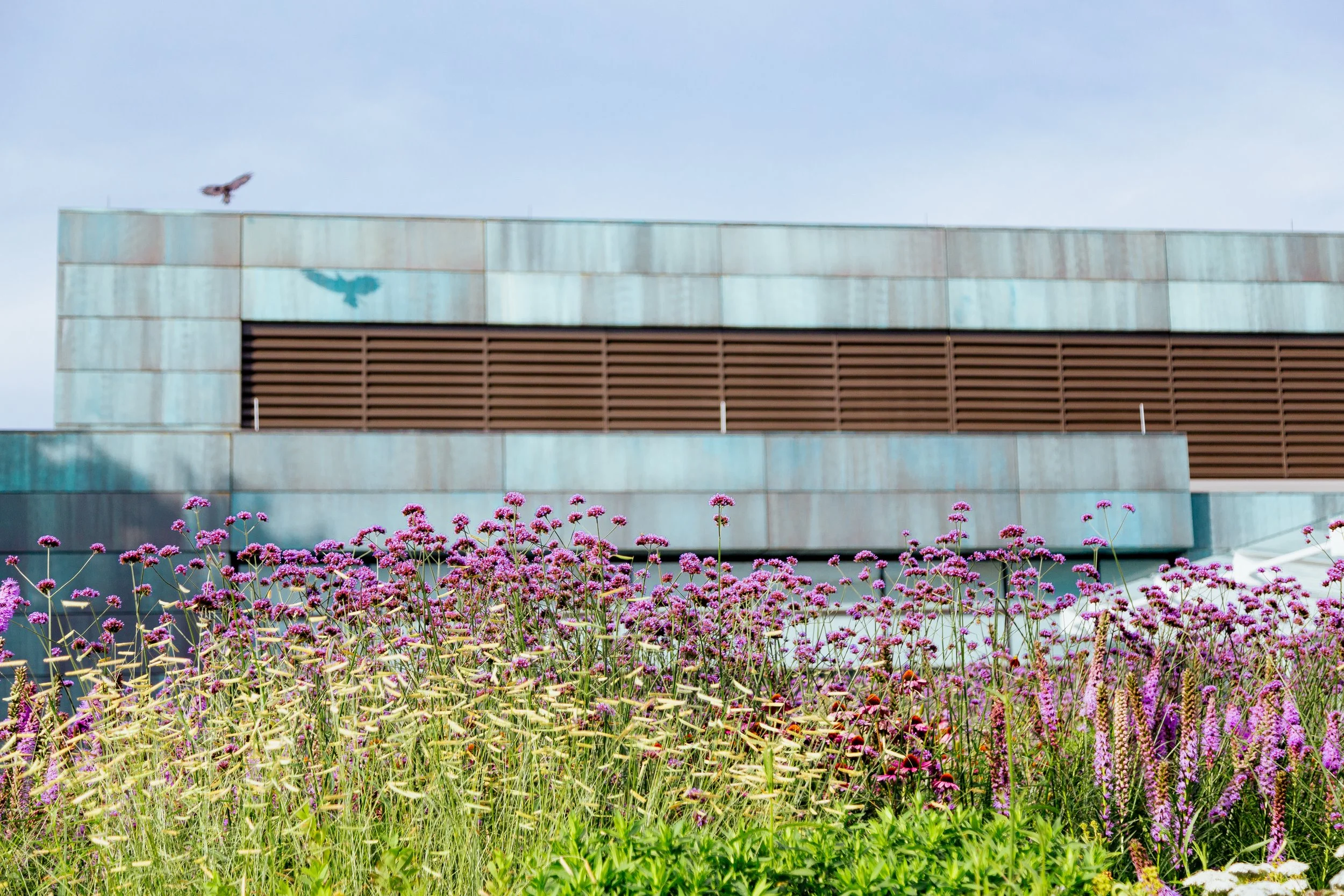
Green roofs and vegetated assemblies on Miami mixed-use buildings serve a dual function: they reduce the urban heat island effect in a city that ranks among the nation's most thermally intense urban environments, and they provide a marketable amenity for upper-floor residential tenants. The specification challenge in Miami is that the growing medium must retain adequate moisture for plant health between rainfall events—which can be separated by weeks during the dry season—without creating ponding conditions that compromise the waterproofing membrane. Bioretention-optimized growing media blended for South Florida's sandy soil conditions perform better than generic green roof mixes.
Multi-stakeholder coordination on Miami mixed-use buildings is further complicated by the city's condo-hotel and fractional ownership models, where individual unit owners, a hotel operator, a retail tenant association, and a condo association may each have different perspectives on capital spending. Roofing decisions in these buildings often require board votes and sometimes litigation when a major repair or replacement arises. The most effective way to avoid this is to establish a reserve study at the time of certificate of occupancy that specifically addresses the roof system's expected lifespan, replacement cost in Miami market pricing, and annual reserve contribution requirements under Florida Statute 718.
Fire-rated assembly requirements in Miami are layered between the Florida Building Code's structural requirements, HVHZ wind provisions, and Miami-Dade product approval requirements for roofing materials. Every roofing product installed on a building in Miami-Dade County must carry a Notice of Acceptance (NOA) issued by the county's Building Code Compliance Office. For mixed-use buildings, this means that not only the primary membrane but also the insulation, adhesive, fasteners, and any rooftop deck finish system must individually carry valid NOA numbers—a requirement that eliminates many products commonly used elsewhere in the country.
Sea level rise adds a long-term dimension to Miami mixed-use roof planning that is absent in most other U.S. markets. Buildings in low-elevation areas of Wynwood, Little Haiti, and along the Miami River face the prospect of more frequent tidal inundation of mechanical systems at grade, which over time increases the burden on rooftop-mounted equipment. Mixed-use buildings constructed today should be designed with the expectation that mechanical systems will migrate upward over the building's lifespan, and rooftop equipment pads and structural reinforcement provisions should be incorporated now rather than added in a costly future retrofit.
Frequently asked questions
Is built-up roofing still installed on new Miami commercial buildings?
Rarely on new construction. BUR has largely been replaced by TPO and PVC single-ply membranes for new commercial low-slope construction in Miami-Dade. Modified bitumen — a close relative of BUR using polymer-modified asphalt plies — is still specified for specific applications, particularly in recover configurations and on buildings where foot traffic and mechanical abuse favor the thicker ply system. We install and maintain both BUR and modified bitumen on existing buildings but rarely specify BUR for new construction.
How do I know if my 1980s Miami office building's BUR system is still viable?
A moisture survey is the starting point — either electronic moisture probing or infrared thermography. If insulation saturation is below 25 percent by area and the deck is sound, a recover with targeted wet-area removal and a new mechanically attached membrane or modified bitumen cap is often viable. If saturation is widespread or the deck is deteriorated, replacement is the honest scope. We provide the moisture survey data and the deck inspection findings as part of the assessment so the decision is based on documented condition rather than a contractor's estimate.
Can a BUR system be recovered with TPO in Miami-Dade?
Yes, when the BUR substrate is dry, the deck is sound, and an NOA-approved recover assembly exists for the specific BUR type and TPO system combination. We verify the NOA approval before designing the recover specification. Not all TPO manufacturer systems have Miami-Dade NOA approvals for BUR recover configurations — the approval list is assembly-specific.
What is the typical service life of a Miami BUR system?
A well-installed BUR system in Miami conditions typically provides 20 to 30 years of service life before significant rehabilitation is required. Miami's high UV intensity, surface temperatures exceeding 160 degrees F, and coastal salt environment accelerate asphalt oxidation and ply adhesion degradation relative to inland markets. Pre-1992 Miami BUR systems that are now 30-plus years old and have not been recovered or significantly repaired are generally past viable service life.
Get a documented BUR condition assessment for your Miami building.
Our project managers will conduct a moisture survey, pull cores at suspect locations, inspect deck condition, and deliver a written report with recover-versus-replace recommendation and cost basis — before any commitment to a scope.